
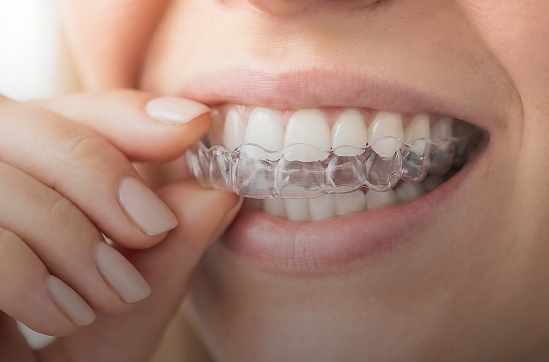
A nightguard can help protect teeth from cracking and wearing down by placing a smooth barrier between the upper and lower teeth during sleep. It spreads grinding force across the guard instead of the teeth, but it does not stop the grinding itself. Knowing what a nightguard does and does not protect against, and how a custom guard is fitted, makes the decision easier. This guide covers how a nightguard works, the cracks and wear it helps prevent, why fit matters, what to expect when you start wearing one, and how to care for it.
A Nightguard Protects Teeth While You Sleep
A nightguard is a mouth cover worn over the upper or lower teeth during sleep. It keeps the teeth from meeting directly, so grinding and clenching force spreads across the guard instead of landing on the teeth. That cushioning is how a nightguard can protect teeth from cracking and wear. The grinding itself continues, with the guard taking the strain. The next section shows what that strain does to unprotected teeth.
How a Nightguard Helps Prevent Cracks and Enamel Wear
Grinding wears teeth down, while clenching presses on them for long periods. Both can put far more force on teeth than normal chewing. A nightguard helps guard against three kinds of damage that result.
Cracks and Chips
Repeated heavy pressure can cause hairline cracks or chip the edges of teeth. A cracked tooth may hurt when you bite or react to cold. A nightguard takes the force that would otherwise reach these weak points, which can lower the risk of new cracks.
Enamel Wear
Grinding slowly rubs away enamel, so teeth can look flat, short, or worn. Thinner enamel often brings sensitivity to hot and cold. A nightguard can slow this wear by keeping teeth from rubbing against each other, but enamel that has worn away does not grow back.
Damaged Fillings and Crowns
Grinding can loosen fillings and chip or crack crowns, even well-made ones. A nightguard helps protect existing dental work from the same forces that damage natural teeth.
Expect a Short Adjustment Period With a New Nightguard
A new nightguard can feel bulky for the first few nights while your mouth adjusts, and this often settles with regular wear. If it rubs, feels loose, or changes how your teeth meet, ask for an adjustment. A guard only protects when it is worn.
The benefits build over time as there is less new wear and fewer chips, not overnight. Some people also notice less jaw tightness in the morning. Your dentist can compare your teeth at checkups to see how well the guard is working.
Caring for Your Nightguard Keeps It Protecting Your Teeth
A clean, undamaged guard protects better and lasts longer. These habits keep it in good shape:
- Rinse it after every use.
- Brush it gently with a soft toothbrush and mild soap.
- Use cool water, since hot water can warp it.
- Let it air dry, then store it in a ventilated case.
- Replace it if you see cracks, thin spots, or a loose fit.
Get Your Teeth Checked for Grinding Damage at Waterdown Village Dentistry
Worn, chipped, or cracked teeth and a sore jaw in the morning are worth checking early, before the damage grows. At Waterdown Village Dentistry in Waterdown, Dr. Jordan Alley, Dr. Matthew Iaboni, and the team provide checkups, crowns, root canal therapy, and emergency care for teeth already damaged by grinding. Book an appointment to talk about protecting your teeth.
Frequently Asked Questions
Can a nightguard help with jaw soreness?
It may ease muscle strain by reducing clenching pressure on the teeth, but it is not a treatment for jaw joint problems. Jaw pain that lasts needs an exam to find the cause.
Do you need a nightguard if you clench during the day?
A nightguard only protects during sleep, so it will not help with daytime clenching. Notice when your teeth touch while awake, and relax your jaw. Mention the habit at your next visit.
Should you wear a nightguard every night?
Wear it as your dentist advises, since grinding can happen on any night. Skipping nights leaves your teeth unprotected. Ask us if you are unsure how often to wear it.
Is a nightguard safe to wear with crowns or implants?
Yes, when it fits properly, a nightguard can protect crowns and implant crowns from grinding force. Tell us about any dental work you have so the guard is made with it in mind.
Can a child wear a nightguard?
Children’s teeth and jaws are still growing, so a guard needs a dentist’s advice first. Bring your child in for an exam, and we will talk through whether a guard makes sense.